Aquí tienes una traducción profesional y sofisticada del texto, adaptada al lenguaje técnico y corporativo del sector inmobiliario internacional de habla inglesa:
Strategic Real Estate Investment: Pre-Construction as a Capital Efficiency Mechanism
In today’s real estate environment, acquiring assets in the pre-construction phase has evolved from a simple speculative strategy into a sophisticated financial hedging mechanism. For institutional and private wealth portfolios, the true value of this modality lies not solely in the discount on the final purchase price, but in the optimization of capital deployment during the development phase.
1. The Leverage Effect Without Financing Costs
The primary structural advantage of pre-construction is the staggered management of cash flow. Unlike a completed property, which demands immediate settlement of the full value or the instant activation of a mortgage loan, pre-construction allows the down payment to be fractionalized into a structured payment schedule over the course of construction (typically between 24 and 36 months).
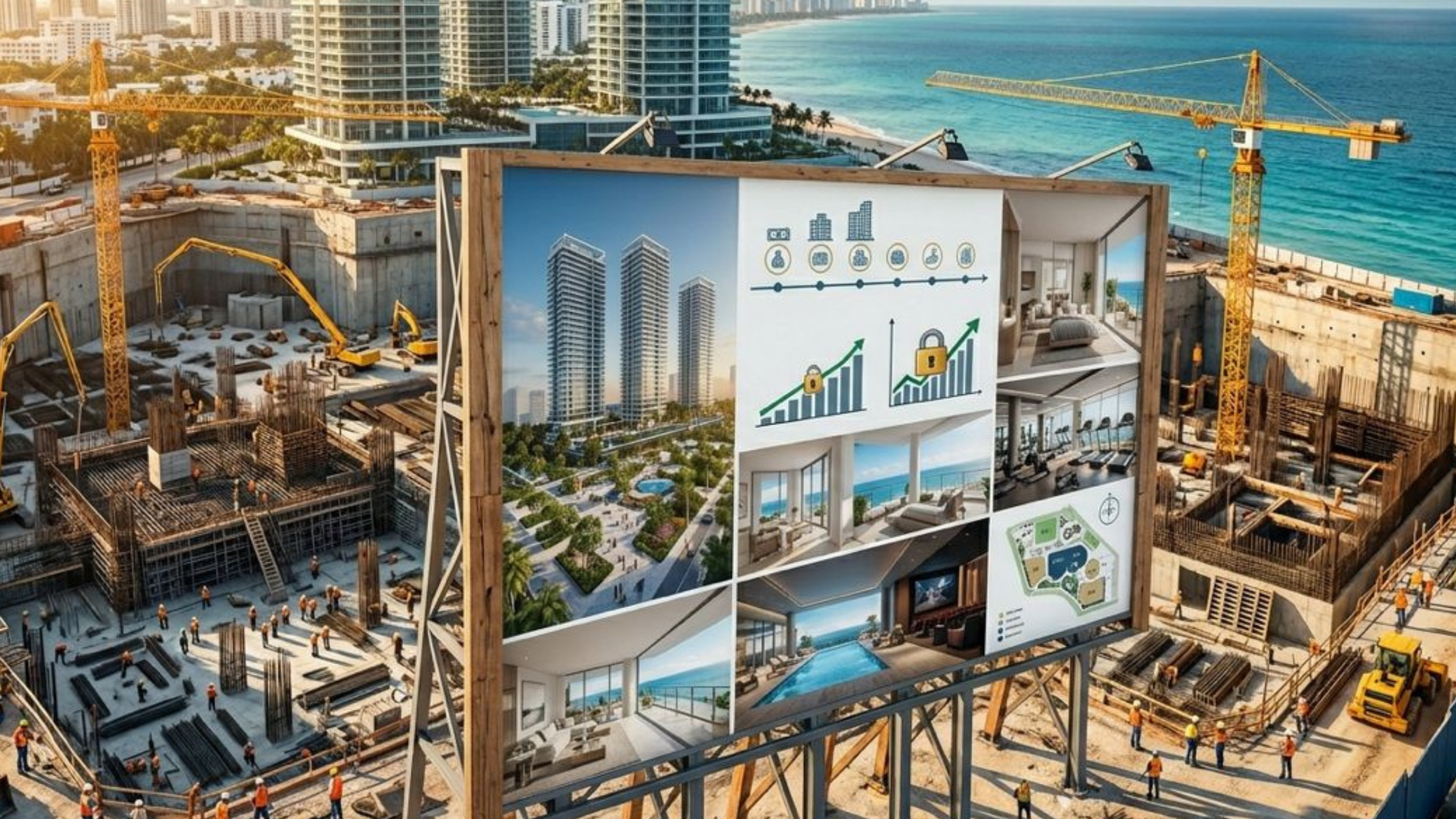
This framework generates an accelerated return on investment (ROI): the buyer freezes the commercial price of the asset with a minimal initial outlay (usually between 5% and 10%), allowing the property’s total value to capture market appreciation while the remaining capital stays liquid or yields returns in other financial instruments.
2. Value Capture by Development Phase (Latent Appreciation)
Real estate development segments its commercialization into well-defined technical stages. Entering during the initial phases (“Friends & Family”/Tier Zero or the excavation phase) guarantees acquisition at the lowest cost per square meter within the building’s lifecycle.
As the project hits construction milestones (completion of foundations, structural framing, and core & shell), the developer adjusts prices upward to reflect the reduction in execution risk. The investor who enters during the initial phase absorbs this latent appreciation, securing a capital gain margin prior to key handover.
3. Obsolescence Mitigation and Operational Cost Efficiency
Acquiring pre-construction ensures that the physical asset complies with the market’s strictest technical and energy regulations. This translates into direct post-delivery financial benefits:
- Developer Warranties: Full coverage for latent defects and finishes during the initial years, reducing corrective maintenance expenses to zero.
- Operational Efficiency (NOI): Next-generation developments integrate thermal insulation, automation, and water management systems that lower utility and communal service costs. This increases attractiveness for high-profile tenants and optimizes Net Operating Income (NOI).
Conclusion
Pre-construction investment must be approached through the lens of risk management and capital efficiency. It is not about buying real estate; it is about acquiring a futures contract on a tangible asset. In a market where liquidity is a strategic resource, the ability to control a high-value property with a fraction of its cost represents the most robust methodology for intelligently expanding a real estate portfolio.